
Clifftop Brew Guides
Everything you need to get the best from your Clifftop Coffee at home — from your first pour over to dialling in your espresso.
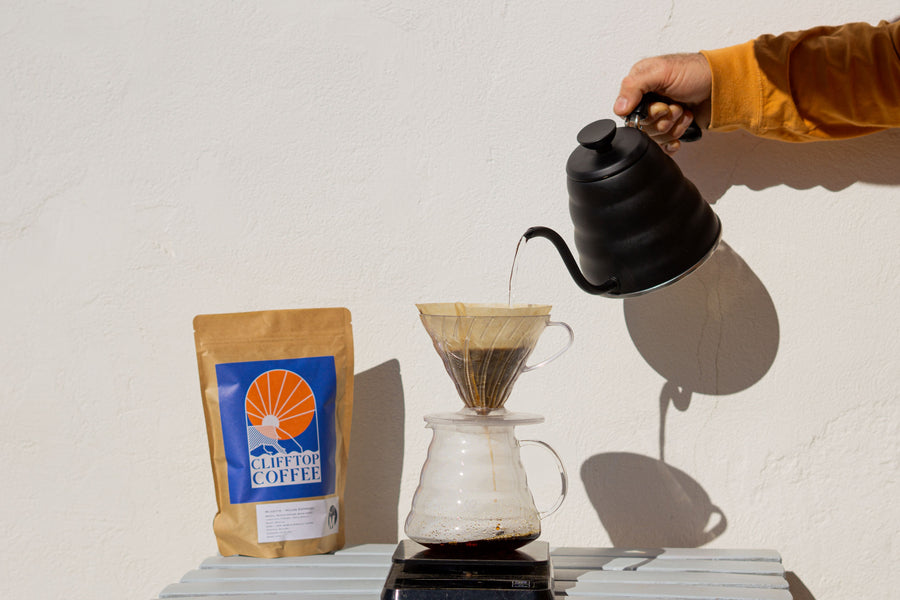
Filter coffee
V60 Pour Over
The V60 is one of the most popular specialty coffee brewing methods in the world — and for good reason. Its cone shape and spiral ridges encourage an even, controlled extraction that highlights the individual character of a coffee. At Clifftop Coffee, we recommend the V60 for brighter, fruit-forward coffees where clarity of flavour really shines.
It takes a little practice to master, but the results are worth it. Here's how to brew a consistently great V60 at home.
- Place your V60 on a cup or server. Insert a paper filter and rinse it with hot water to remove any papery taste and warm the dripper. Discard the rinse water.
- Add 15g of medium-fine ground coffee to the filter. Give it a gentle shake to level the bed.
- Place on your scales and tare to zero. Start your timer.
- Bloom (0:00 – 0:30): Pour 30g of water in slow circles, ensuring all the grounds are saturated. Let it bloom for 30 seconds. This releases CO₂ and sets up an even extraction.
- First pour (0:30 – 1:00): Pour steadily in concentric spirals to reach 150g total. Keep the pour slow and controlled.
- Second pour (1:00 – 1:30): Continue pouring to reach 250g total. Try to keep the water level even in the dripper.
- Allow the coffee to drawdown fully. It should finish draining between 3:00 and 3:30. Enjoy immediately.
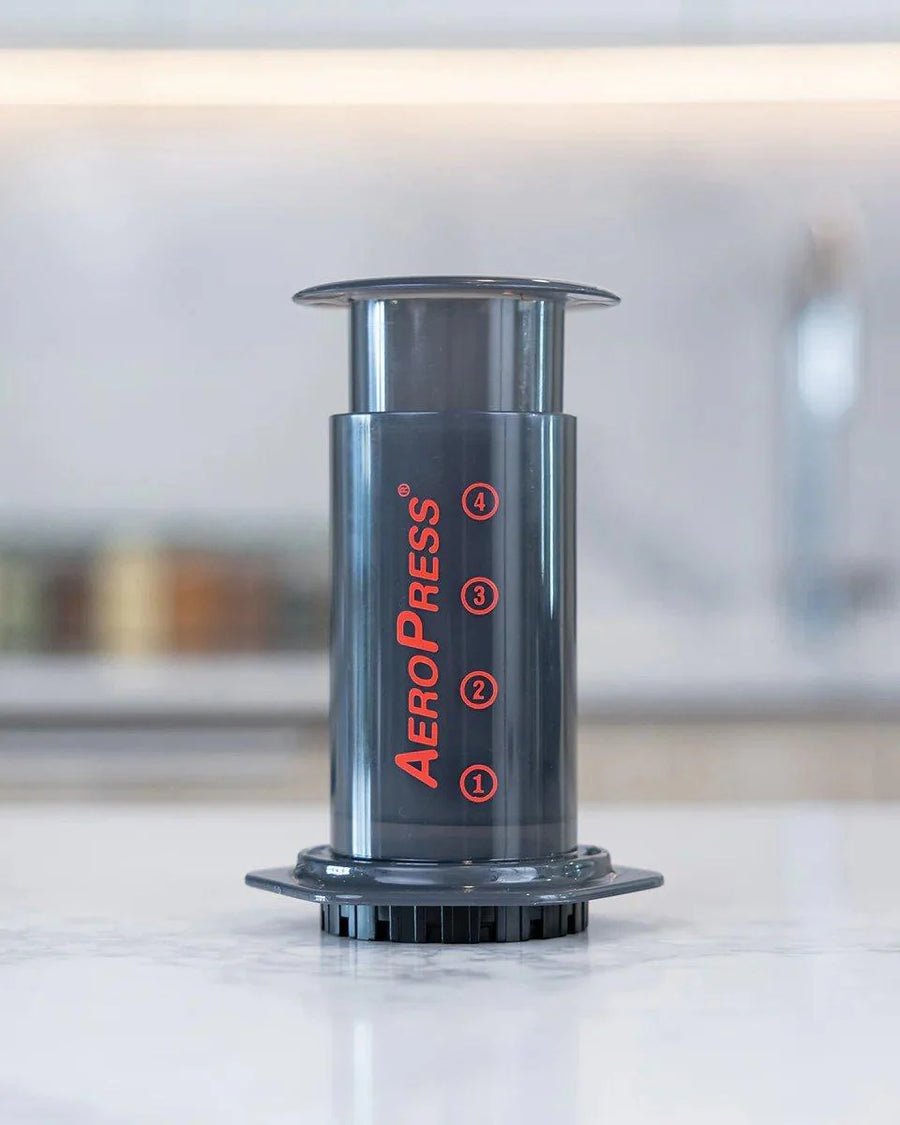
Immersion brewing
Aeropress
The Aeropress is the most versatile brewer in your kitchen. It's quick, forgiving, easy to travel with, and produces a clean, concentrated cup with very low acidity. At Clifftop Coffee, we love the Aeropress for experimenting — the variables are easy to tweak, so it's a great tool for exploring what different coffees have to offer.
We use the inverted method here, which gives you more control over steep time and produces a more even extraction.
- Assemble your Aeropress in the inverted position — plunger inserted to just above the number 4 mark, open end facing up.
- Add 15g of medium ground coffee into the chamber.
- Start your timer and pour 220g of water at 88–92°C. Stir gently to ensure all grounds are saturated.
- Place a rinsed paper filter into the cap and screw it on firmly.
- At 1:30, carefully flip the Aeropress onto your cup. Take your time — a slow flip gives a cleaner result.
- Press the plunger slowly and steadily over 30–40 seconds. Stop just before you hear the hiss of air. Enjoy straight away.
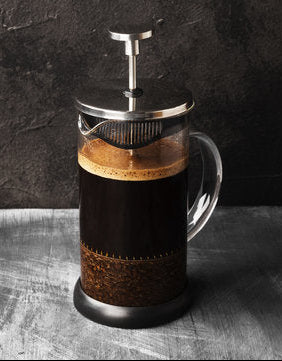
Full immersion
French Press
The French press is a classic for a reason. Full immersion brewing produces a heavier, more textured cup — rich and satisfying, with plenty of body. It suits coffees with deeper, chocolatey profiles particularly well. If you're after something bold and comforting at the breakfast table, this is your brewer.
The key with a French press is a coarse grind and decanting immediately after pressing. It's the simplest change you can make, and it transforms the cup.
- Preheat your French press with a splash of hot water. Swirl and discard to warm the glass and help maintain brew temperature.
- Add 30g of coarsely ground coffee to the empty press.
- Start your timer and pour 500g of water at 94°C in a steady stream, making sure all the grounds are saturated. Give it a gentle stir.
- Place the lid on top with the plunger pulled up — do not press yet. Leave to steep for 4 minutes.
- At 4:00, press the plunger slowly and steadily to the bottom.
- Decant into a separate vessel immediately. Leaving coffee in the press continues the extraction and turns it bitter.
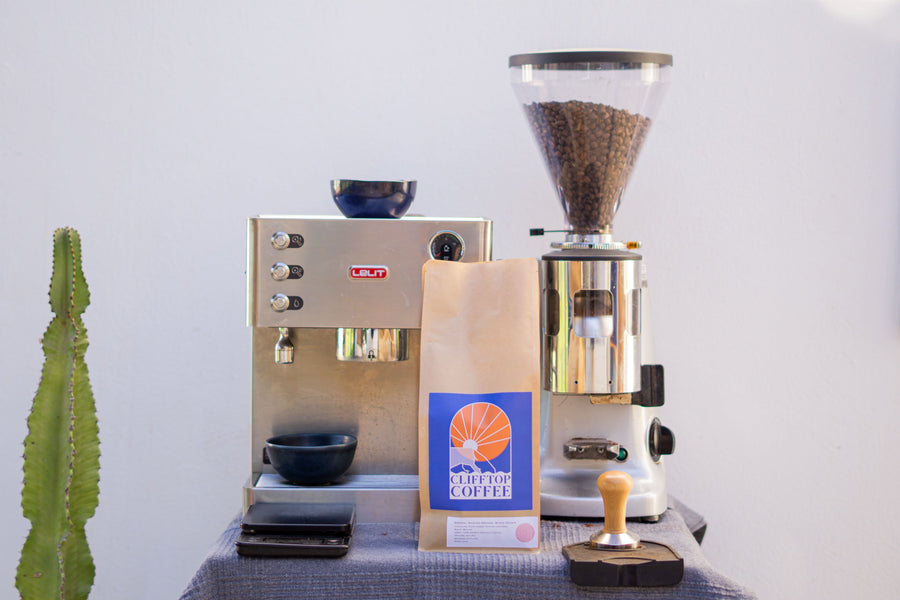
Pressure extraction
Espresso
Espresso is the foundation of most coffee drinks — the shot behind your flat white, cortado, or lungo. Brewing it well at home takes a bit of patience to dial in, but once you find the sweet spot, it's one of the most satisfying things you can make. Clifftop Coffee roasts specifically for balance, which means our espresso-suited coffees are forgiving and approachable even on a home machine.
The most important variables are dose, yield, and time. Get those right and everything else falls into place.
- Run a blank shot through your machine to bring it up to temperature. Preheat your portafilter and cup.
- Grind 18g of coffee fresh into your portafilter basket. Use a fine grind — finer than filter coffee, but not powder.
- Distribute the grounds evenly across the basket, then tamp with firm, level pressure — around 15–20kg. An uneven tamp causes channelling and an uneven shot.
- Lock the portafilter into the group head and place your cup (on scales) beneath it. Start your timer as you begin the shot.
- Aim for 36g of espresso in 25–30 seconds. If it runs faster, grind finer. If it runs slower, grind coarser.
- Taste and adjust. Dial in your grind one small step at a time — espresso rewards patience.
Stovetop brewing
Moka Pot
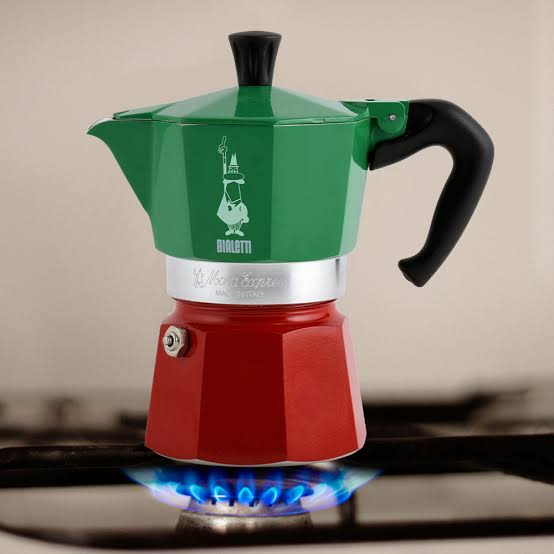
The Moka pot is one of the most widely used coffee brewers in the world, and one of the most misunderstood. When brewed correctly, it produces a rich, strong, intensely flavoured coffee — not quite espresso, but closer to it than anything else you can make on a stovetop. At Clifftop Coffee, we love a Moka pot for bold, chocolatey coffees that hold up to a little steam pressure.
The key differences from how most people use one: start with pre-heated water, use medium-fine grounds, and take it off the heat early.
- Boil your kettle first. Fill the bottom chamber of the Moka pot with hot water up to just below the safety valve. Starting with hot water prevents the grounds from scorching as the pot heats up.
- Fill the filter basket with medium-fine ground coffee — level it off with your finger but do not tamp. Overfilling or compressing will restrict the flow and cause a bitter result.
- Screw the top and bottom chambers together firmly, using a cloth if the bottom is hot.
- Place on medium-low heat with the lid open. Keep an eye on it — you'll hear and see the coffee beginning to flow into the upper chamber.
- As soon as the flow slows and begins to sputter and hiss, remove the pot from the heat immediately. This is the sign that the water is nearly spent and over-extraction is starting.
- Run the base under cold water for a few seconds to halt the extraction, then pour and serve straight away.
Not sure which coffee to start with?
Our sample pack includes five Clifftop coffees at 100g each — a great way to explore the range and find your method's best match. Or visit our coffee guide if you need help choosing.
Shop all coffees